 (610) 510-7825
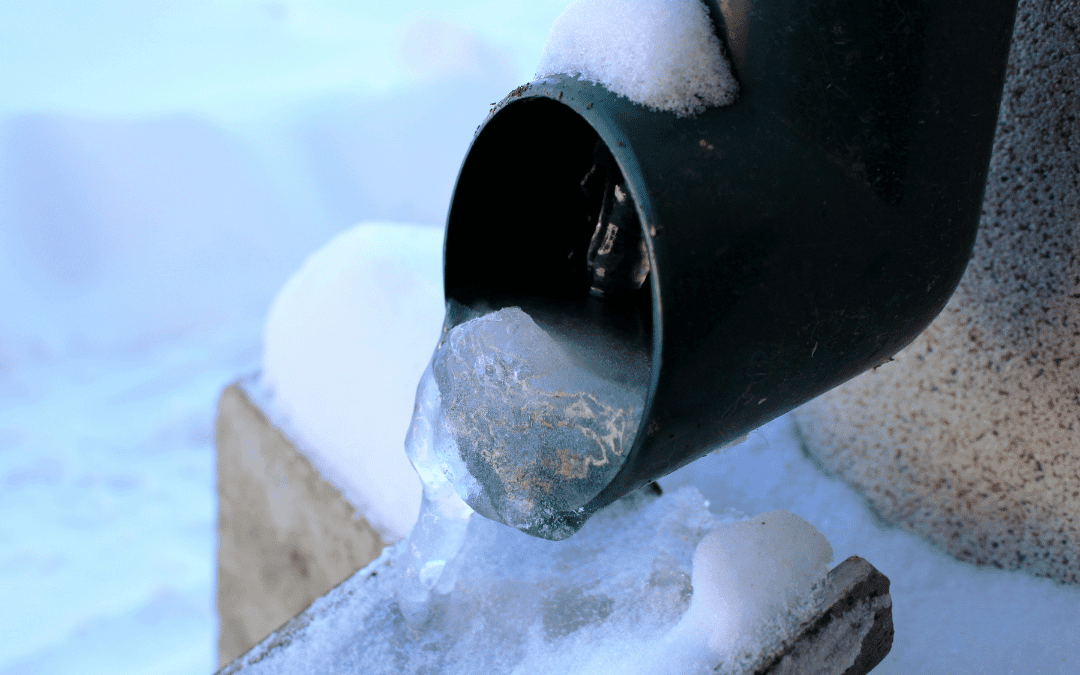
When winter hits a commercial building, plumbing failures rarely happen because someone “didn’t care.” They happen because risk hides in the gaps between teams, shifts, and systems. Freeze events, after-hours calls, and burst pipes are the visible crisis. The real problem is usually invisible: incomplete readiness.
Facility managers and property teams are measured on uptime and continuity. Winter is the season where those goals collide with real-world physics. The good news is that most winter plumbing failures are preventable if you know where the blind spots are and you build a repeatable plan.
Winter risks that escalate fast
1) Freeze exposure in “in-between” spaces
Pipe runs in loading docks, stairwells, exterior walls, unheated storage rooms, above ceilings near outside air, and mechanical rooms that “usually stay warm enough” are common weak points. The risk is not just cold air. It is inconsistent heat and airflow, plus doors opening constantly and creating temperature swings.
2) Domestic water, hydronic lines, and critical building systems
A frozen domestic line is disruptive. A compromised fire sprinkler line is a life-safety event with huge liability. Risk ranking matters: not every pipe is equal, and winterization planning should reflect consequence-of-failure, not just convenience. (This type of risk prioritization is a recurring theme in facility winterization guidance.)
3) After-hours failures are operational failures too
Burst pipes often happen overnight or during low-occupancy periods. That makes “response readiness” a systems issue: who gets called, who has access, who can authorize work, where shutoffs are, and how fast the right decision gets made.
What facility teams often overlook
Blind spot 1: Not having a verified shutoff map and access plan
A lot of buildings “have shutoffs.” Fewer have a shutoff plan that is actually usable in an emergency: labeled valves, updated maps, keys/access, and clear responsibility. When a pipe bursts, minutes matter and confusion is expensive.
Blind spot 2: Assuming insulation equals freeze protection
Insulation slows heat loss, but it does not guarantee freeze prevention if the surrounding air gets cold enough or stays cold long enough. Real freeze protection depends on the full system: insulation, ambient heat, airflow, and in some cases active measures like heat tracing with proper controls. ASHRAE energy guidance even calls out that freeze protection systems (like heat tracing) should use automatic controls and shut off when conditions don’t require them, which signals how “active” these systems can be and why they need management, not set-and-forget habits.
Blind spot 3: “We’ll do it when the weather turns” is already too late
Winter readiness is not a one-day checklist. It is a pre-freeze season process: inspection, prioritization, corrective work, verification. Several facility winterization guides recommend starting weeks ahead of the first freeze and documenting conditions to build a work plan.
Blind spot 4: Not stress-testing after-hours decision paths
People plan for equipment. They forget to plan for humans. Who approves emergency work at 2:00 a.m.? Who can escort contractors? Who has the vendor list? Who knows what “good” looks like under pressure? If the answer is “it depends,” you have a reliability risk.
Blind spot 5: Treating risk as purely mechanical, not operational
Winter failures are often a chain: a small leak becomes a freeze, becomes a burst, becomes flooding, becomes business interruption. Insurers frame winter risk as a management problem as much as a building problem: prevention, preparedness, and response planning reduce the impact when conditions get harsh.
A practical framework to reduce winter failures
Step 1: Rank your systems by consequence-of-failure
Start with life safety and business continuity systems (sprinkler lines, critical domestic branches, mechanical support lines). Document what cannot fail.
Step 2: Identify freeze zones and verify conditions
Don’t guess. Walk the building. Look for draft paths, unheated cavities, door traffic, roof penetrations, and equipment rooms with inconsistent heat.
Step 3. Close the “readiness gaps”
- Update shutoff maps and label valves
- Verify access (keys, locks, escort requirements)
- Confirm vendor escalation paths
- Schedule pre-freeze corrective maintenance
- Consider active freeze protection where needed, and ensure it’s controlled and monitored appropriately
Step 4: Run one after-hours tabletop drill
Do a 20-minute scenario: “burst pipe at 2:00 a.m.” Who calls who? Who authorizes? Who meets the plumber? Where are shutoffs? You’ll find the weak links immediately.
Where Agentis fits
For property managers and commercial facilities, reliability is about minimizing downtime and preventing emergencies, not just fixing what breaks. Agentis’ commercial positioning emphasizes fast service, 24/7 emergency response, and minimizing operational disruption.
That approach aligns with what winter demands: speed, clarity, and disciplined execution when conditions are unstable.
Winter plumbing failures in commercial buildings are rarely “bad luck.” They are usually the result of predictable blind spots: access, mapping, prioritization, and readiness. The teams that get through winter cleanly are not the ones with the fanciest equipment. They are the ones who prepared early, ranked risk correctly, and rehearsed response like it actually matters.